The Architectural Life of Miyamoto Musashi: Discipline, Strategy, and the Foreseen Death
The Gold Series: The Architectural Life of Miyamoto Musashi
Discipline, Strategy, and the Foreseen DeathAbout The Gold Series: This series examines moments in history where a single truth was enough to change everything, but human greed, comfort, or the temptation to alter it for our own convenience ultimately buried its original purpose. Miyamoto Musashi is one of the rare exceptions who refused to compromise.
Miyamoto Musashi (c. 1584–1645) is famous for a few specific reasons. He fought his first duel at thirteen. He went on to survive over sixty life-or-death matches without losing. And in his later years, he turned that hard-earned experience with violence into art and strategy.
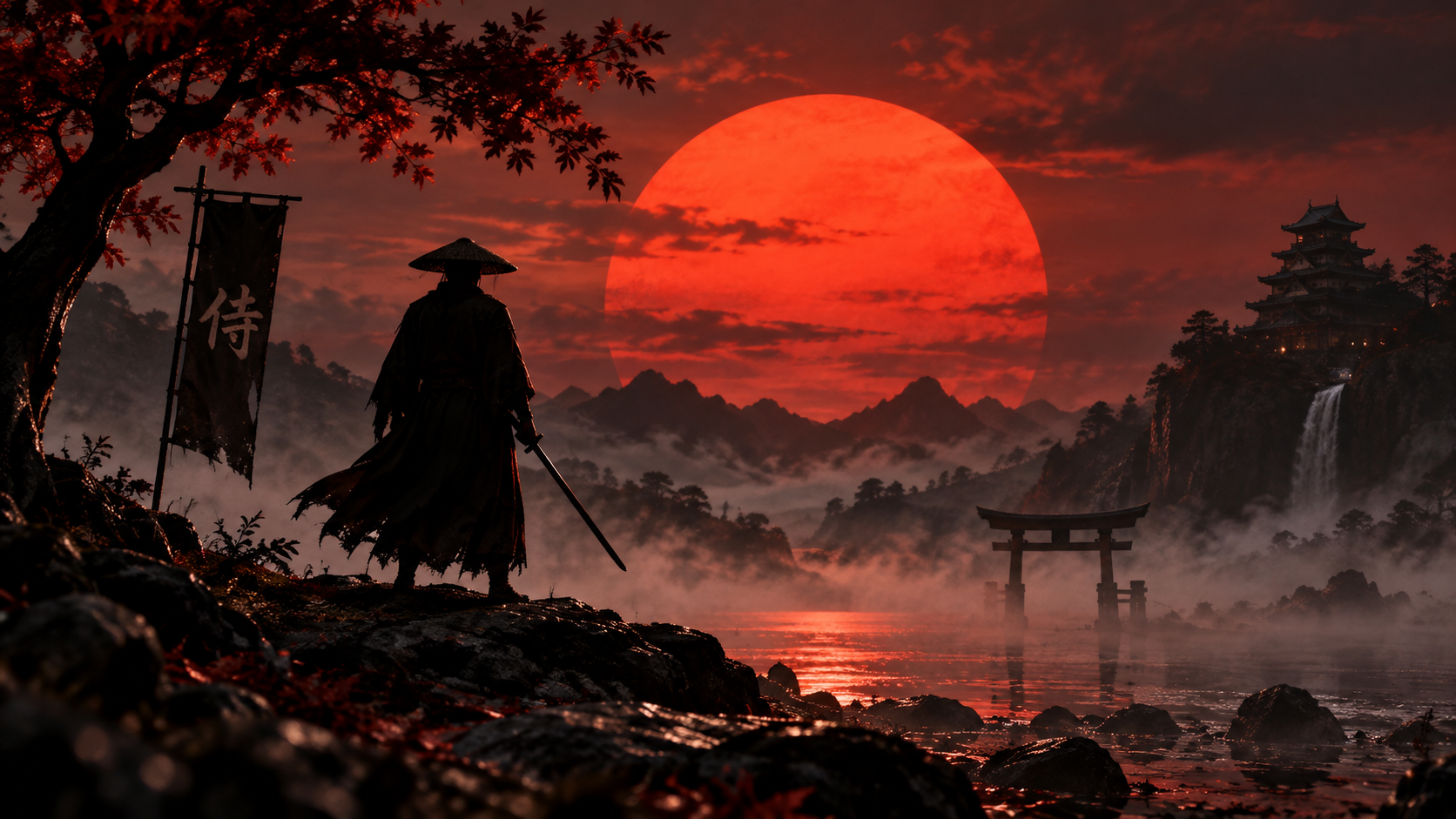
Unlike most samurai of his time, who served a single feudal lord, Musashi chose to be a shugyōsha— a wandering martial artist.
He didn’t just fight. He broke down combat, daily life, and philosophy into a system that actually worked.
You can see the intention behind every choice he made.
A Practical Evolution: Niten Ichi-ryū
Back in the early 1600s, fighters typically held the long sword (katana) with both hands. Musashi decided to do things differently. He came up with Niten Ichi-ryū (School of Two Heavens as One), which meant using both the long sword and the short sword (wakizashi) at the same time.This wasn’t about looking cool. It was about what actually worked.
Space matters. Trying to swing a two-handed grip in a tight spot is awkward.
Musashi figured out how to make his style work wherever he was.
Use everything you have.
He used to say a warrior shouldn’t die with a weapon still sheathed. If you’re carrying a short sword and not using it, you’re making a mistake.
Block and strike. You’d use the short sword to catch or deflect an attack, then follow up with the long sword for the finishing move. Both pieces working together.
Seeing vs. Perceiving
Musashi pointed out there’s a real difference between just looking at something and actually understanding it.
Ken — that’s observation. This is the surface stuff.
Where the opponent is standing, how they’re moving, the things you can easily spot.
Then there’s Kan — perception. Musashi called it catching what someone can’t hide.
That slight wobble before they commit. The pause when they’re not sure.
The moment their certainty cracks. These things don’t lie, even when their stance does.
His advice was straightforward:
trust your gut reading of the situation more than just what your eyes are telling you. People can fake their stance, but they can’t fake their intent.
Don’t get fooled by what you see on the outside.

Breaking Their Timing
One of Musashi’s main ideas was that you win by getting inside the other person’s head and messing with their timing. He talked about three approaches.Shoken no Sen — you go first, catching them before they’ve set themselves.
Tai no Sen — you let them come at you, then you cut right through their attack as it’s happening.
Tai Tai no Sen — when you both charge at the same time, you shift your position to throw off their angle.
He actually used this in his most famous fight against Sasaki Kojirō. Kojirō had this reputation for being lightning fast with his sword.
So what did Musashi do? He showed up late. Really late. He spent the boat ride over carving a wooden sword out of an oar.
By the time he finally walked onto the beach, Kojirō was already worked up, angry, and thrown off his game.
Musashi had basically won the fight before they even crossed swords.
The Wanderer-Artist
Musashi kept his life pretty rough on purpose. He skipped warm baths and avoided comfortable beds because he thought getting too comfortable made you soft.
But at the same time, he put serious effort into ink painting (Sumi-e), woodcarving, and calligraphy.
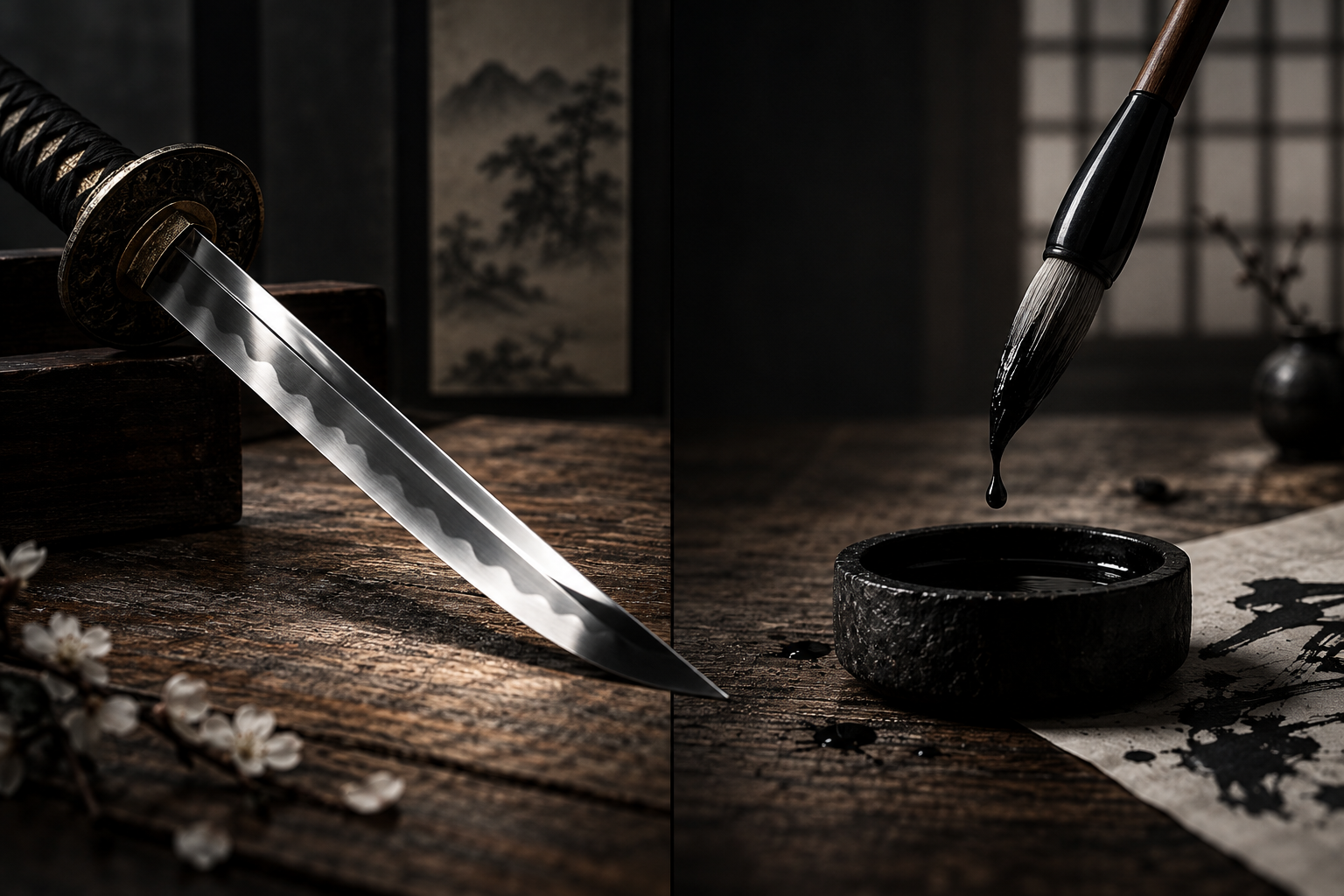
He had this belief that if you really get something deep down, you start seeing it everywhere. The kind of concentration you need to carve a piece of wood isn’t that different from the focus you need in a fight.
The Final Days in Reigandō Cave
In 1643, when he knew he was running out of time, Musashi went to live in Reigandō Cave.
He didn’t freak out or try to make himself comfortable. He just sat down and wrote everything he knew, putting together
The Book of Five Rings (Go Rin no Sho) and The Way of Walking Alone (Dokkōdō).
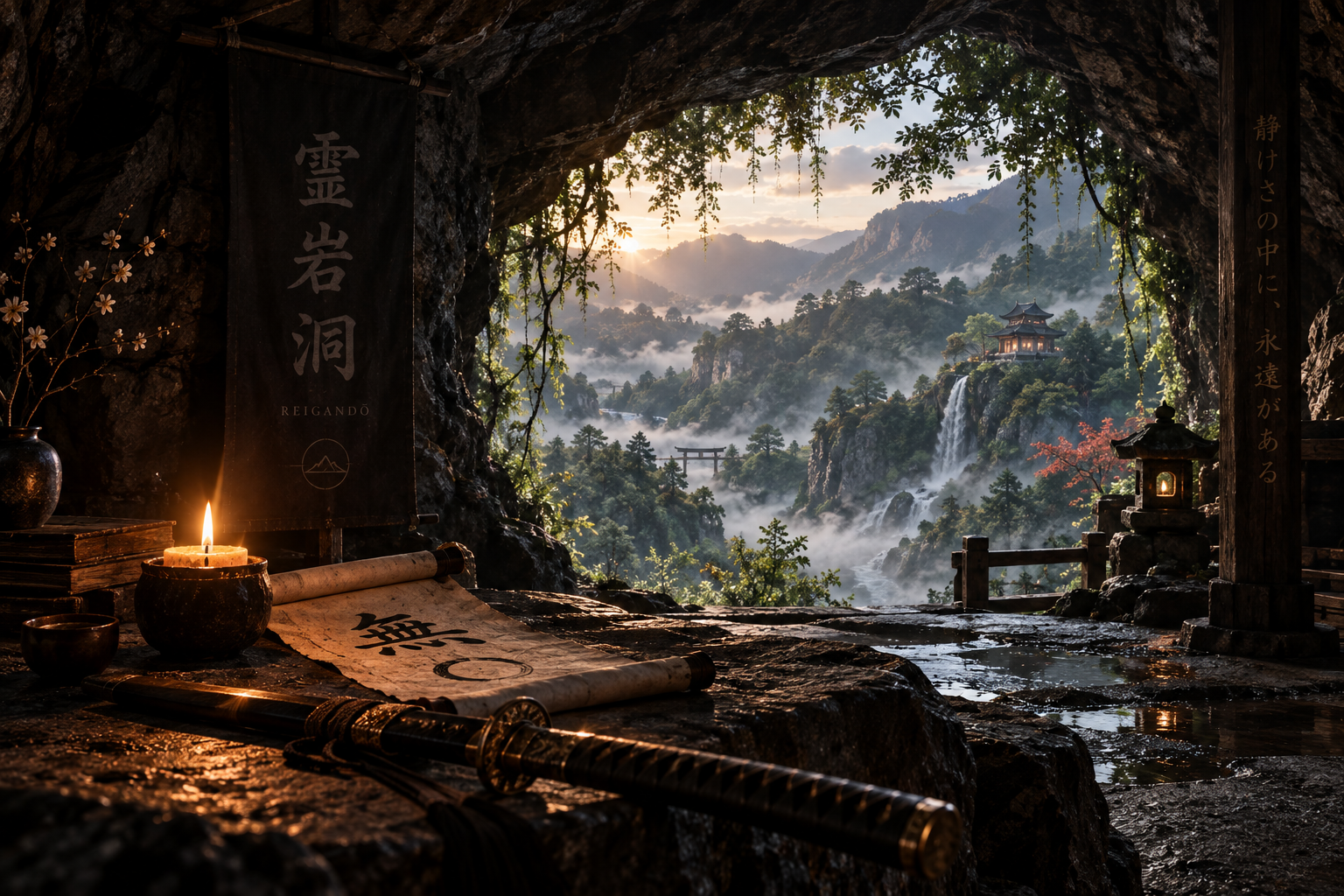
He died on June 13, 1645, sitting up straight with his short sword in his hand. Even at the end, he stayed disciplined.
He left behind the Dokkōdō — twenty-one precepts for walking alone.
A few that stick with me:
Accept everything as it is.
Don’t chase pleasure just because it feels good.
Think lightly of yourself, but take the world seriously.
And don’t fear death.

Simple words. Hard to live by.- Abubakr -