The GOLD Series: The Invention of Marcus Aurelius
The Marketing Illusion vs. The Reality
If you pick up a copy of Marcus Aurelius today, the cover usually shows a clean, white-marble statue. The title is Meditations. The back cover tells you it’s a manual for stress relief—a way to stay calm and bulletproof in our chaotic world.
This is a beautiful image, but it’s mostly a marketing trick.
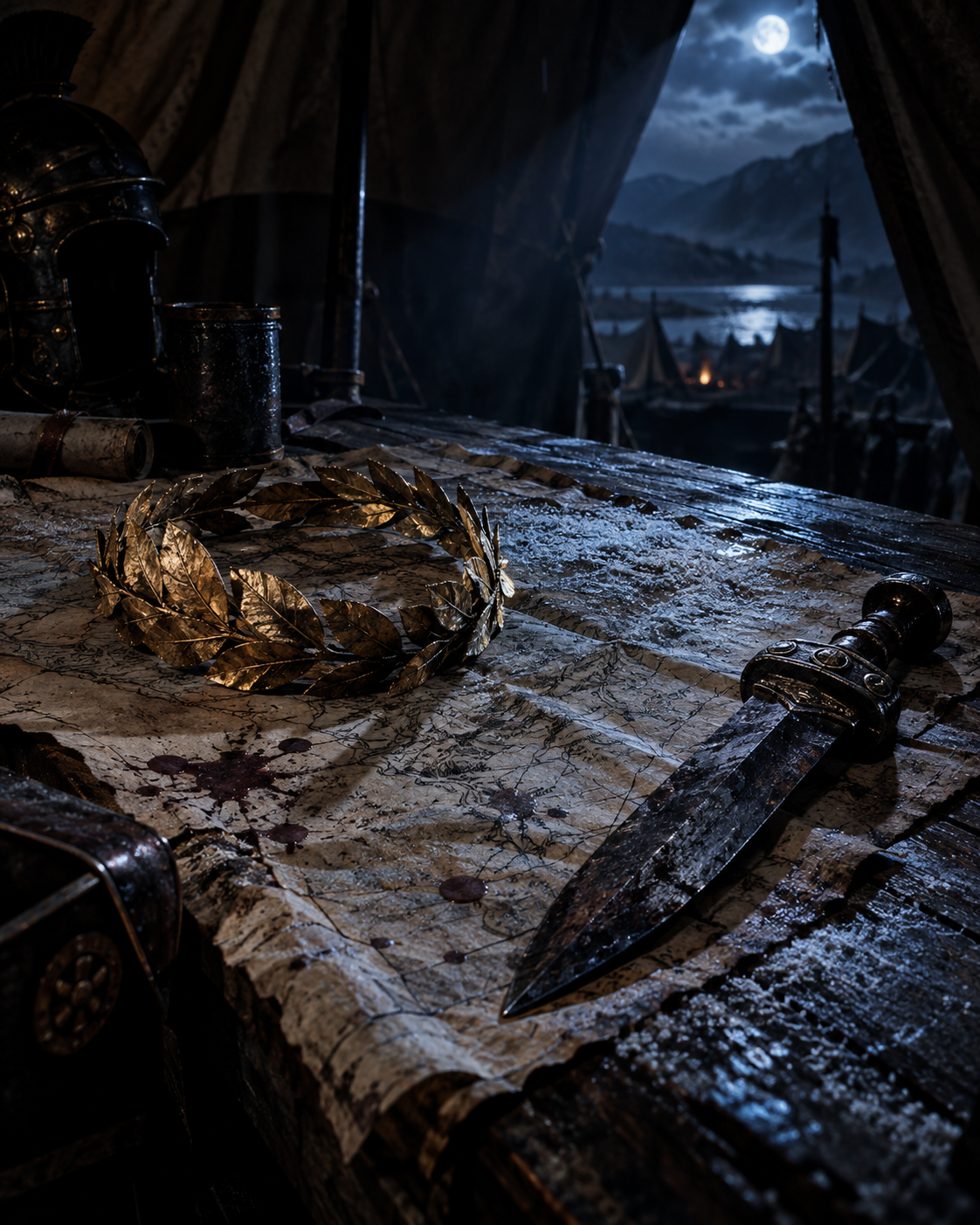
Marcus Aurelius wasn’t sitting in a quiet villa writing "life-hacks" for us. He was a military dictator living through a nightmare. When we look past the modern rebranding, we find that Meditations wasn't even a book. It was a private, messy, survival kit. It was written by a man who was dying in a freezing tent on the edge of a violent empire.
To Himself – A Notebook of Survival
Let's look at the facts. Marcus never gave his writing a title. In history, it was called Ta eis heauton "To Himself."
He wrote it while commanding soldiers during the Marcomannic Wars (170–180 AD). At that time, a plague was killing millions of people across Rome. His Greek wasn't elegant or "fancy"; it was rough, repetitive, and filled with military-style commands. He was barking orders at his own mind: "Wipe out the impression," or "Stay in the present".
Marcus was a materialist. He didn't believe in a "personal God" or a "heaven." To him, the universe was just a machine of cause and effect. He believed that when you die, you just turn back into atoms. His philosophy wasn't "positive thinking" it was about looking at a harsh reality and refusing to complain about it.
The Christian & Royal Makeover
How did a pagan Roman emperor become a hero for Christians and Kings? Through careful editing.
The original text almost disappeared. It survived through a single ancient copy. When medieval monks found it, they had a problem: how could a non-Christian be so wise? Their solution was to "edit" him. They ignored his hard-core physics and pretended his ideas on duty were actually "Christian humility." They dressed a Roman soldier in a monk's robes to save the book.
Later, in the year 1558, European kings used Marcus for propaganda. They turned a book about controlling your ego into a manual for justifying absolute power. They called him the "Philosopher King" to make their own rules look better.
The Silicon Valley Distortion
Today, the distortion is even worse. Corporate gurus and podcasters have turned Marcus Aurelius into an executive coach. They want you to use Stoicism to "crush your goals" or ignore burnout so you can work harder.
This is the exact opposite of what Marcus believed:
He hated fame : He joked that wanting people to remember you after you die is as stupid as wishing people had liked you before you were born.
He hated luxury : He warned himself to stay away from wealth and status. Today, his face is printed on expensive leather-bound books sold to corporate climbers.
He believed in duty : He saw humanity as one single living thing. Hurting someone else was the same as hurting yourself.
Reading the Real "To Himself"
To truly understand Marcus, you have to ignore the marketing. Forget the "effortless calm."
Look at the raw entries where a tired, 50-year-old man tells himself to stop being cranky with his staff. Look at him accepting that his body is falling apart and that he will soon be "bones and ash."
He didn't write to change the world or to "scale a business." He wrote to keep himself from breaking under the weight of an empire. What’s left is something rare: a brutally honest record of a human being trying to do the right thing, simply because it was the right thing to do.